
Why Backpacks Can Pose Problems and How Parents Can Help

Carrying The Heavy Load
When we were growing up it was the norm to use your locker throughout the day, but today’s kids backpack around their schools. Yet during my near-decade of teaching in the public schools, it didn’t matter how many times I encouraged students to use their lockers—they always said they never had enough time.
Sure, kids need to bring books home to do homework, which is part of the issue: in a recent study published in the American Journal of Family Therapy, students receive three times the recommended load of homework. Still, homework isn’t the ultimate culprit.
Schools give students a very short amount of time to visit lockers in between class changes. Administrators implement this policy not just to maximize time spent in the classroom, but also to help curb tardiness and hallway fights. As a result, students feel they have no choice but to lug around their entire lockers’ worth of books.
The Bigger Problem
The American Academy of Pediatrics suggests that your child’s backpack never weigh more than 10 to 20 percent of your child’s body weight, but it seems that students are carrying heavier weights than this on a daily basis.
An MRI Study found that heavy backpacks do contribute to back pain in children. The problem isn’t necessarily with the actual bag, per se; it’s with how heavy the contents are and how a student carries that weight. It’s just common sense, after all: when you put a heavy weight on your back and don’t carry it properly, you’re likely to pull or strain something.
What Parents Can Do
No, you can’t carry your children’s books for them. You’ll fight an uphill battle fighting administration to alter the school schedule to allow for more time between classes (although schools might find a reasonable request to base locker assignments on lunch dismissal classes, giving students a mid-day checkpoint at least to drop off and pick up new books). So what can you do?
- When you’re out shopping for back-to-school supplies, have your child try on backpacks: the bag should look proportional to your kid.
- A backpack fits properly when its weight falls between your neck and your waist.
- Look for a bag with wide, padded, shoulder straps and encourage your student to use both of them—the one-shoulder look may feel easier or look “cool,” but it will wreak havoc on your child’s posture and back.
- After that point, buy the smallest lightweight backpack that meets your child’s needs. Keep in mind that canvas is lighter than leather, and the bigger the bag, the more unnecessary stuff your child can pack into it.
- Teach your child to pack smart: heaviest books go in first and closest to your back, and only bring home what you need in order to complete your homework.
- Choose a time before the start of a new week (so Friday after school or Sunday night) to have your child clean out their backpacks so he or she isn’t carrying around any unnecessary weight.
- Work with your child to develop a strategy to map out more locker time. Ideally, he or she could switch out books before the first class, on the way to or out of lunch, on the way to a class, and at the end of the day.
If your child complains about back, neck, or shoulder pain, certainly consider how heavy his or her school bag is, make adjustments, and don’t hesitate to discuss this issue with your general practitioner at the next well visit, or reach out to your local chiropractor.
About the Writer
tech
How Healthy Eating Habits Improve School Performance

Good nutrition at school can lead to positive academic performance and healthier bones.
Child health experts in the U.S. have been exploring the effects of a child’s diet on academic performance and behavior for more than two decades. Data strongly suggest that students with better nutrition have an increased mental capacity and a lower rate of absenteeism, and generally exhibit less disruptive behavior.
Breakfast is the meal most strongly associated with doing better in school. A 2013 study found that breakfast had a positive effect on children’s academic performance, and children who regularly eat breakfast were found to be more likely to have better overall nutrition, including higher consumption of dietary fiber and lower total fat and cholesterol.
Increased Mental Capacity
Studies published in the American Journal of Clinical Nutrition, Pediatrics, and the Journal of the American Academy of Child and Adolescent Psychiatry have all concluded that hungry children have lower math scores, are more likely to repeat a grade, and come to school late. A 2012 study published in the Journal of Educational Research concluded that among participating fifth-grade students, the frequency of eating fast food and salty snacks correlated with lower math and reading scores.
Science generally supports the belief that a balanced diet can positively influence the cognitive ability and intelligence levels of school-aged children. It also favors a wider implementation and investment in school nutrition programs that can improve student access to more healthful food choices and translate into higher academic performance and overall enhanced general health.
Better Attendance
Good nutrition helps students arrive at school ready to learn, and because good nutrition helps children maintain good health, students who eat a balanced diet typically have fewer absences and attend class more consistently.
Research has shown that on the average:
- Students who eat school breakfast attend 1.5 more days of school per year than those who do not.
- Students who attend school more regularly are approximately 20 percent more likely to graduate from high school.
- High school graduates earn about $10,090 more per year and have a four percent higher employment rate than those who do not graduate.
Positive Behavior
According to the National Education Association (NEA), studies of school breakfast programs in Massachusetts, Maryland, Minnesota, and Rhode Island have found that students who eat breakfast at school exhibit fewer behavioral and psychological problems.
A 2008 British study found that while nutrition is vital for physical health, it is equally important for mental health, and a diet lacking in essential nutrients is detrimental to the healthy functioning of the brain. Researchers found that a deficiency of omega-3 essential fatty acids (EFAs) is associated with certain mental and behavioral disorders, including attention deficit hyperactivity disorder (ADHD), depression, dementia, dyspraxia, and an increase in impulsivity and aggressive behavior, although this association is not fully understood.
Stronger, Healthier Bones for Active Students
Healthy eating can also help with the prevention and healing of back pain. Leafy greens like kale and spinach provide calcium to build strong bones, so keeping your fridge stocked with these fresh whole foods will set your kids up for success this school year as they carry heavy backpacks and return to their favorite sports.
Also be aware of your family’s vitamin D intake. According to the National Institutes of Health, a lack of vitamin D can hinder your body from absorbing calcium and cause bones to grow brittle. Try a high-quality supplement or do more outdoor activities to keep your family active and healthy.
Vitamin A can promote bone growth, but if you’re filling your pantry with fortified cereals and certain dietary supplements, you may be consuming the less-preferred form of the vitamin known as Retinol. Too much retinol can actually break bones down, so be sure to eat a variety of dark orange veggies like sweet potatoes and carrots, along with leafy greens like mustard and turnip. These types of fresh foods provide the safer form of vitamin A (beta-carotene) and provide more nutritional content altogether.
Good Nutrition Can Lead to Positive Academic Performance
All children have the potential to achieve in school, but poor nutrition can put them at risk for missing out on this potential. Providing more healthful food choices in school and at home can help position students for a successful academic future.
Image By xixinxing / 123RF Stock Photo.
About the Writer
tech
Team Training For the Win
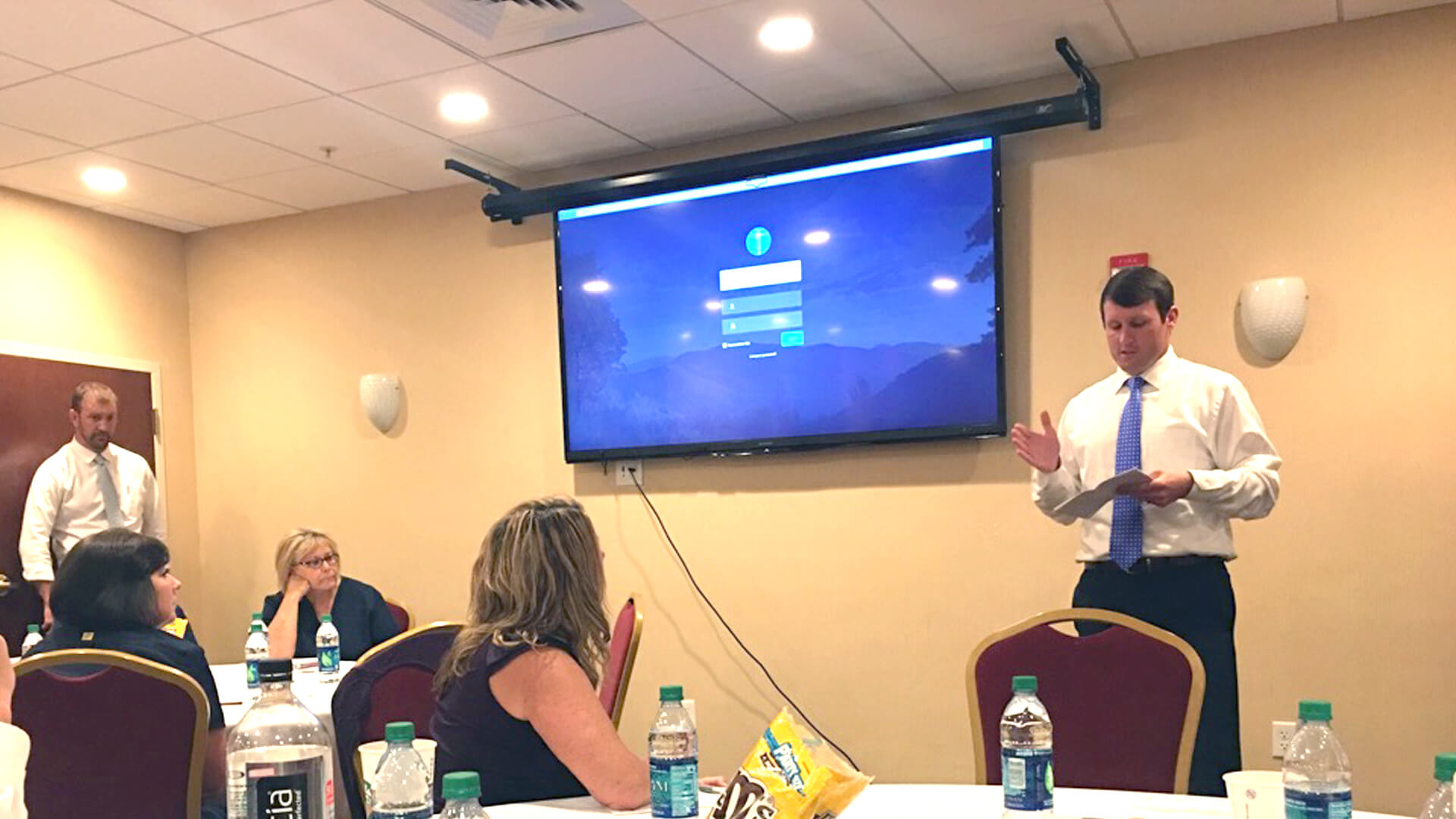
It has been said that if you are determined to learn, no one can stop you. We believe that quote embodies the collective Tuck Chiropractic mindset. We see ourselves as perpetual students, eager to continue the process of learning. A large portion of the education we seek is related to improving as physicians and better clinical practices. However, we also seek to learn and grow as professionals and people in general. We want to have better customer service skills, hone in on our passions and skill sets, and energize ourselves through group training sessions. Since this is so important to us, we have made it a regular practice to host a monthly company training session.
Our training sessions cover a wide variety of topics and are largely driven by the interests of our team. We have listened to the interests of our people from across the various clinic locations to determine what they feel is most beneficial. Some of the topics include health and nutrition information, communication etiquette, tips for better patient interactions, and personality assessments. It could be argued that some of the topics we discuss fall outside the realm of chiropractic. We would politely disagree. Much like wellness, it is important that all the parts of the Tuck Chiropractic team are functioning at their best, so the team as a whole is stronger for it. Helping our staff develop in healthy and positive directions is good for them as individuals and also for our collective team, it is a win-win.
Tuck Chiropractic is also unique in that it is 11 different clinic locations all part of the same company, driven by the same mission and core values. Keeping all clinics interacting and on a mission is important. Gathering as a team regularly is a key step in ensuring this consistent patient-centered focus. As Missy Turner, with our Human Resources Department, explained, “I personally enjoy the camaraderie that I see when we gather together. I also enjoy watching those individuals grow and step into more active roles as they themselves begin to share with others, train others, and lead others. That’s what it’s all about.”
One recent training session, from July 2016, featured world-class athlete, Charles Clark. Charles didn’t just speak to our team; he inspired our team to continue our mission to positively impact other people. He encouraged us to be bold and shed the fear that holds us back from achieving goals. He said, “Life is too short to let fear contain you.” It was an encouragement to us all to hear his remarks. Charles provided us with a great reminder of why we all entered this profession in the first place: we have a purpose to help and serve others. He also had us break up into small groups and share ideas about what it means to preserve the integrity of the team. Pausing our work days to think about the importance of sharing an encouraging word, clarifying expectations, or communicating clearly were all good reminders about how the small things have a big impact.
“Prioritizing time to invest in our most valuable resource, our people, is really important. Through these monthly trainings, we are creating an environment where a culture of excellence and high standards are the norm,” explained Missy. If we tell our team we want them to grow and develop then we know we must set the example by creating opportunities to do exactly that. The reality is, the better we are as individuals the better we are as a team. The better we are as a team the better we can serve our patients and leave a positive impact on their lives.
About the Writer
tech
On the Go With No Time for Back Pain

Mike and his family.
It has been said, “not all who wander are lost.” That describes Mike really well. His “wanderings” are quite purposeful and part of his job; he is an outside sales representative with an expansive territory to cover. Mike is responsible for clients from Maryland to Puerto Rico, how’s that for responsibility? Each week he is on the go either driving or flying up and down the Mid-Atlantic and South East to meet the needs of his many clients. In order for him to be at his best, he needs to feel his best. Mike’s job demands a friendly, highly relational, and solution-driven approach to each appointment. With the demanding travel schedule and need to be at his best with clients there is just no room for pain and discomfort in Mike’s busy schedule. Unfortunately, that is the exact predicament Mike found himself in.
Prior to coming to Tuck Chiropractic Clinic, Mike had a lot of lower back pain, specific to his left side. This persistent pain was the product of the many hours spent driving and flying from visit to visit. While the chronic discomfort was hard to live with it wasn’t the impetus for Mike’s first visit to Dr. LaBarbera, rather it was an acute injury. While Mike stays busy with his travels he stays even busier keeping up with his wife and four daughters. It was one afternoon, while he was outside doing yard work and playing with one of his daughters, that he tweaked his back causing a debilitating injury. Mike could barely stand up straight. It was then that he began treatment with Dr. LaBarbera at the Bedford Clinic.
Dr. LaBarbera worked with Mike and was able to resolve the pain caused by the outside play incident. Once the immediate issue was resolved he moved to a regular approach to prevent injury and promote back health. Within six months the persistent back pain was no more. It wasn’t because Mike was traveling less; he was traveling just as much as ever. Instead, it was because Mike prioritized his back health and formed a consistent health partnership with Dr. LaBarbera. Mike would have gladly continued at the Bedford Clinic indefinitely but there came a day when Dr. LaBarbera knew there was a better solution for Mike’s busy schedule. Mike explained, “He thought it would be much more convenient for me when Dr. Skinner’s office opened on Peter’s Creek.” That is when Mike transitioned to the care of Dr. Skinner.
He has found both doctors to be effective in maintaining his back health. They both gave information on how to sit while traveling to mitigate the negative effects on his back. They also provided suggestions for stretches he could do before and after traveling. Their care and effect on Mike’s wellness extend beyond back health to his overall health. “Both Dr. A.J. and Dr. Skinner talked to me about core muscles and different stretches to make it possible for me to work out,” said Mike. He explained that prior to seeing Dr. LaBarbera and Dr. Skinner he didn’t have a regular workout routine. However, Mike now has a dedicated workout routine that includes a blend of cardio and weight circuits for strength straining. “Previously, I wouldn’t have been interested in doing that,” said Mike. One quality he values in both of the doctor’s approaches is that they live out the principles they share with their patients. Mike said, “Both Dr. LaBarbera and Dr. Skinner are in good shape themselves. So they model what they practice. They are good role models.”
Speaking of good role models, Mike has become a great role model to his wife and daughters. He was the first in the family to pursue chiropractic care. Now, it is part of his entire family’s healthcare. As he recalls, his wife saw the positive impact chiropractic had on his health decided to try it for herself. She began seeing Dr. Skinner for issues with her neck and then, like Mike, transitioned into a maintenance approach. If she doesn’t go regularly she notices. Mike said that his daughters have also taken note of the role chiropractic is playing in their parent’s health. “Our kids have gotten curious about it from watching us go,” explained Mike. Right now his daughters get adjustments as needed. For example, one of his daughters got an adjustment after an injury from essentially rough housing—you know, the kind of fun kids love.
For Mike, it’s all about his family. When discussing the reasons his family chooses Tuck Chiropractic Clinic for their healthcare he said, “It’s about our schedule, our needs, our health.” Mike loves that the care his family receives at Tuck Chiropractic is the kind of care that is making his life and his family’s life happier and healthier. We must admit, we love that too!
About the Writer
tech
6 Ways to Beat Chronic Pain and Get Back in the Game

Keeping a positive attitude is one of the first steps in working through chronic pain.
You’ve always worked hard to be as competitive in your sport as possible. You’re on top of your game because you’ve never shirked when it comes to putting in the hours and the miles. You have a record of coming through when it counts, both for your teammates and for yourself.
Then it happens. You may notice some pain or tenderness in your back, but you quickly dismiss it. You try to ignore the pain and just push through it, but when you have trouble getting out of bed in the morning, you begin to worry that it’s not something you can just shake off.
Seeing a doctor confirms your fears: You’ve injured your back, and the pain will likely be with you for a while. How can you beat this chronic pain and get back in the game?
1) Maintain a Positive Attitude
Try to stay as positive as possible, as hard as this may sound. When positive, your attitude can hasten the healing process and reduce the emotional pain that frequently accompanies an injury. When you’re negative, you can actually slow down the rehabilitation process and end up feeling as bad emotionally as you do physically.
2) Take an Active Part in the Healing Process
Follow the advice of your physician or chiropractor closely, and be as compliant with orders as possible. Practice healing imagery, which is using the mind to help heal your body. Spend at least 5 to 10 minutes a day visualizing your pain diminishing and your back healing. If you work as hard to heal as you did playing your sport, it will make you feel less vulnerable and much more in control.
3) Set New Goals
During the recovery process, you may have to step back and measure your success differently than you used to, based upon your current condition. Focus on getting stronger, not on what you used to be able to do. Once you’re on the road to recovery, you can revisit prior goals and work to maintain your fitness.
4) Practice Mindfulness
Pain creates tension in the body, and the brain responds by amplifying the pain and creating stress, which can aggravate injuries. Mindfulness can stop that cycle by providing a different way to deal with stress. With practice, your pain and suffering may be reduced through mindfulness.
5) Continue to Work Out
Continue to work out if you are able to do so — if not physically, then mentally. Use visualization to mentally see, hear, and feel yourself performing flawlessly. Regular visualization of your skills will keep the neuromuscular connections in your body activated so when you are ready to begin actual workouts, you will be ready to perform.
6) Be Patient
Allow yourself the time to heal properly. If you rush the process, you may be setting yourself up for another, more serious injury that could very well result in even more time spent on the sidelines.
If you are experiencing back pain, contact Tuck Chiropractic Clinic to schedule a consultation. In addition to treatment to help relieve or prevent back pain, our experienced chiropractors can provide expert advice for staying pain-free.
Image by maridav/123RF.
About the Writer
tech
How to Beat the Post-Olympics Slump

Carpe Diem
If you have a body, you’re an athlete. Just do it. Impossible is nothing. All in. I will.
With the Olympics beginning to fade to a distant memory except for a few, still-bright stars, it’s not quite as easy to get up off the couch and be inspired for your daily run or HIIT routine. When the dog days of summer are upon us, it’s tempting to sit back and let time pass us by. While sportswear slogans like the ones above are calculated for profit, the ideas behind that motivating rhetoric may be just what you need to hustle when everything around you seems to be slumping.
The Advantage
Keys to a successful reboot are simpler than you might think. It’s easy to get caught up in making a creative plan for working out, only working out if all the variables are perfect, or neglecting to think outside the box for getting up and getting out there. In the words of Nike, you have to “just do it.” Here are a few thoughts to ponder as you get back into a good routine:
Every little bit counts: You don’t have to have a fitbit to apply this principle – if you purpose to only work out 10 minutes every day, by the end of the week you’ll have logged at least an hour and 10 minutes of sweating it out. That’s better than waiting until you have an hour and 10 minutes to go to the gym and only working out twice a month, with that daily plan, you’ll have about four hours and 40 minutes over the course of the month – twice what you would if you waited for the perfect day. You have a busy life. Just do it – you might be surprised how much time you actually log if you just commit to something bite-sized.
Go all in: Katie Ledecky, Michael Phelps, and Simone Biles would be the first to tell you that they didn’t just wake up gold medalists one day. What did happen in a day was the decision to go all in. If you want to be an elite athlete, go all in. If you want to be a distance runner, go all in. If you want to be able to do the splits at 55 years old, go all in. Make a decision, make a plan, and then commit to it, heart and soul. You don’t have to be an Olympian to be an athlete, and you don’t have to be elite to accomplish your fitness goals, but you will have to train and push your limits and commit if you’re going to make it happen.
Find what works: Nike says, “If you have a body you’re an athlete.” What they mean is, everybody can do something that makes them feel great and is great for them. Pick what works for you – do you get a burst of energy at 5pm? Run then instead of trying to get up earlier. Do you love weights and hate cardio? Find someone who loves cardio and hates weights and commit to helping each other stay balanced by working out together regularly. Do you push harder in a group? Find a class or a running group and commit to it. Carilion Wellness in Botetourt offer over 100 classes and free child care, so if you’re in the area, that might be a great option. But even if you’re not, just do a little research – there’s almost certainly a local fitness center that can help you get on track. In Roanoke, there are studios for everything from Pure Barre to Zumba to Crossfit. Everyone can do something; find what works for you.
The First Step
That’s all great advice, but it still leaves the ball in your court – you have to take the first step. If you need a little more motivation, Lifehacker has some great practical tips and tools to help you get out there and go play. Happy exercising!
Copyright: ammentorp / 123RF Stock Photo
About the Writer
tech
Jennifer's Story

When a migraine hits, getting through life can be near impossible. In addition to being an excruciating headache, migraines are often accompanied by reduced field of vision, dizziness, severe light sensitivity, nausea and vomiting. Take a moment to imagine having the worst migraine of your life. Now imagine that same migraine is happening while you are standing at the front of a classroom full of 5th graders, trying to teach them. That is where Jennifer found herself time and time again.
For years Jennifer has struggled with debilitating migraines. They would strike and she would end up in bed for an entire day. Over the years she saw various doctors and ended up on medication, in an effort to make it possible to live the life she dreamed of. Jennifer is extremely active. Aside from keeping up with busy 5th graders all day long she also instructs fitness classes and is very involved with her church youth group and YoungLife. She is also a big Bachelor fan and never misses watching an episode with her friends, unless a migraine strikes. She is outgoing and energetic—too busy embracing life to contend with migraines!
This past January Jennifer decided that something had to change; the frequency of her migraines had increased. She explained, “I was trying a preventative medication and I really wanted to go off that medication.” After meeting with multiple doctors, and not feeling like she was ever really heard and understood, she ended up in our Bedford Clinic meeting with Dr. LaBarbera. The collaborative aspect of Jennifer’s appointment with Dr. LaBarbera really stood out to her. She remembered, “When I first came to him and explained the issues I was having, he listened to me and developed a plan.”
Moving forward, Jennifer gets regular weekly adjustments. The results have been phenomenal. Jennifer is no longer on medication and the intensity of her headaches has diminished. She explained, “My headaches are coming less frequently and are not as severe so I am able to deal with them if they do occur. Before chiropractic treatments, a migraine meant a day in bed for me and now I am able to at least function.” For a woman with a busy life—and lots of young people that depend on her—this new normal is a welcome change.
An aspect of our patient care that is especially valuable to Jennifer is our willingness to fit in unexpected appointments—because we know migraines (and pain in general) don’t follow a polite schedule. On one such visit, Jennifer’s husband, Cory, had to drive her. The migraine was in-progress and was too intense for her to safely operate her vehicle. It allowed him the opportunity to get a first-hand look at what the treatments were going to be like, and the person responsible for administering the treatments. Jennifer recalled that appointment:
Dr. A.J. brought my husband in and showed him the x-rays and told him about our plan for treatment. When we left, my husband said, “I feel like he really wants to help you!” That was very different from the many different doctors I have seen regarding my migraines over the last several years.
We especially love how Jennifer has integrated chiropractic adjustments with her overall wellness plan. She has a daily workout, makes eating healthy a regular habit, and gets a weekly adjustment. She understands that her health can’t be isolated to just dealing with headaches, just exercise, or just a healthy diet. It is when chiropractic care is aligned with all other aspects of health that the most positive impact is felt.
About the Writer
tech
How Working Out Helps Keep Pain Away

Yoga and Pilates are exercises that improve core strength and flexibility, which can help with back pain.
For years, patients and medical professionals have debated the question of whether exercise is good for back pain or whether it makes it worse.
Research has found that movement can help with back pain, and during the last decade, the opinion of the medical community has shifted away from bed rest and toward exercise, even for those who did not previously work out every day. However, when doctors recommend exercise to their patients, they often encounter a hurdle: the patient’s fear of making pain worse.
The most fearful patients often stand to benefit the most from exercise, simply because it can give them a different view of the relationship between pain and exercise. Cardiovascular (aerobic) exercise can increase mobility and help circulation, and strengthening the core muscles closest to the spine can protect against future pain.
How to Begin
If you have a chronic pain condition like lower back pain or hip, knee, or shoulder problems, you shouldn’t begin an exercise program without guidance.
An experienced chiropractor will typically do a postural assessment to observe how you sit, stand, and walk to help determine what exercises may be appropriate, given your condition. Postural imbalances, for instance, carrying a child on one hip or a bag on one shoulder can trigger pain in the back, hips, knees, and shoulders.
Some simple, safe stretches that can help alleviate back pain include:
- Lie on your back on a carpeted floor or mat and rest your legs on a couch, chair, or ottoman, so that your legs are completely supported from the heels to the back of the knees.
- Lie on a stability ball, face down, and let your body mold to the sides of the ball.
- Try the “happy baby” yoga pose: lie on your back and hold your knees to your chest.
- Perform squats to reduce pain and improve mobility.
Exercises to Help Chronic Pain
Beyond simple stretches, one of the most important types of exercise to improve chronic back and joint pain is cardiovascular exercise. Some types to try include:
- Walking briskly on a treadmill
- Using an elliptical trainer
- Aquatic exercise, from swimming laps to an organized water aerobics class
In addition to cardiovascular training, try strength training, either with free weights or machines to guide movement and simulate support. Pilates and yoga can help improve core strength and flexibility.
Exercises to Avoid
Those with back and joint problems that cause significant pain should typically avoid high-impact exercise like running or organized sports like basketball and soccer, which involve jumping, landing, shifting, and moving in a lot of different directions.
Golf and tennis tend to put a great deal of strain on the back because they use one side of the body more than the other. Although you don’t necessarily need to give them up entirely, just cut back a bit or find other ways to strengthen the neglected side of the body, such as Pilates or rotating exercises with a medicine ball.
Exercise and Pain Relief
Although chronic back pain can reduce a person’s quality of life, the right exercise program can dramatically improve it. There’s no reason to be sitting around the house in pain.
If you’re thinking of starting an exercise program, the doctors at Tuck Chiropractic Clinic can give you the advice you need to proceed safely.
Image by wavebreakmediamicro / 123RF Stock Photo.
About the Writer
tech
Live Your Passion
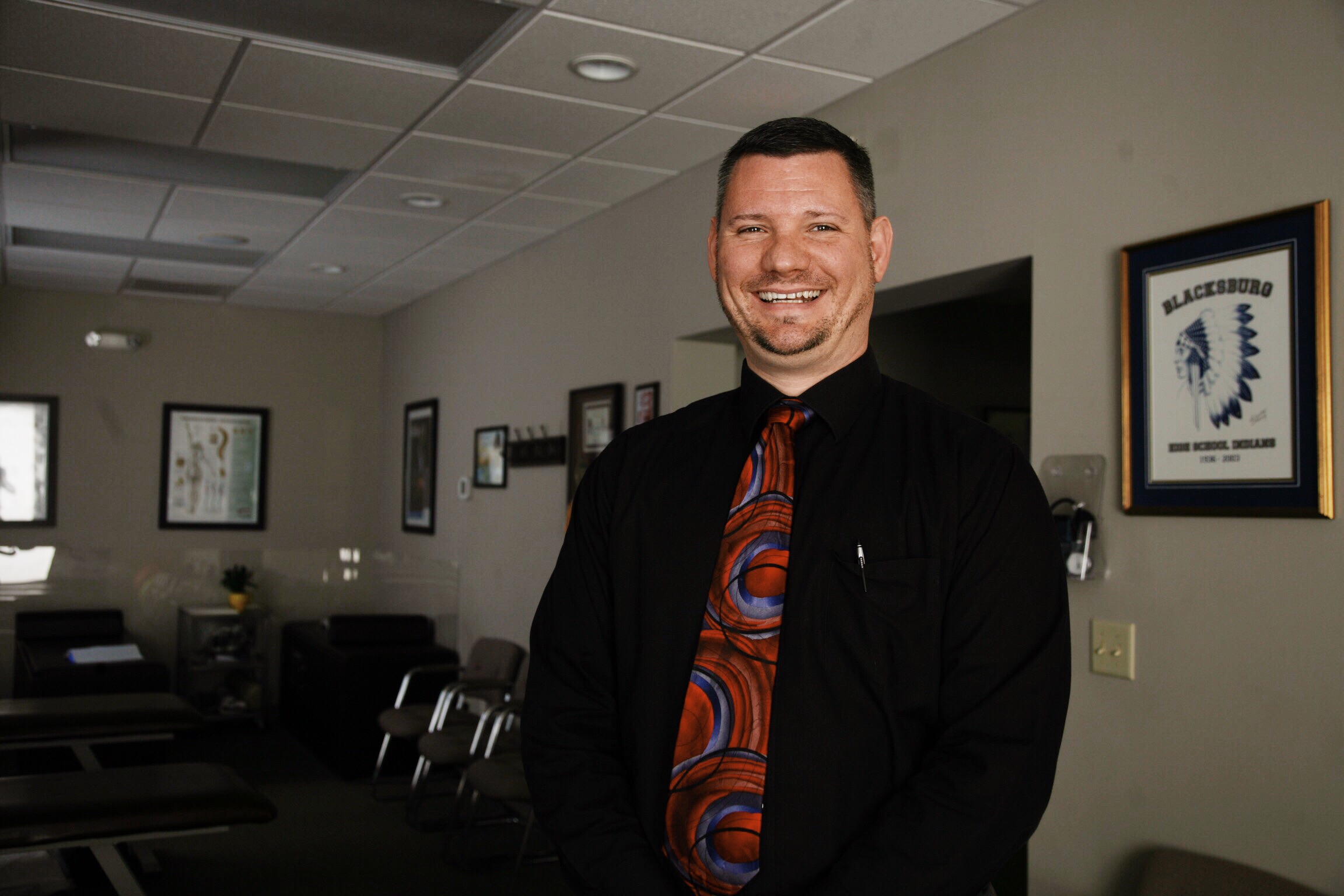
Where do our passions come from? If you do a quick Google search with that same question the variety of answers is staggering. Some say it is the result of chemical reactions in the brain. Others say there are genes that contribute to passion. While others ominously say it is from “within.” While some might feel the origin of passion is an elusive concept for Dr. Logan Brooke it’s quite simple. His passion for chiropractic stems from the life-changing impact it had on his own life.
The word passion is derived from the Latin for “pati” which means to endure or to suffer. As a young child Dr. Brooke, at the time just Logan, both endured and suffered terrible problems with his ears. He had chronic ear infections and common allopathic treatments at the time didn’t help. When asked if he can remember that time he said he can still clearly remember the pain and how severe it was. Logan was subject to a lot of cruel jokes and name-calling while in school, based on his ear problems and the swelling that resulted. He couldn’t go outside while on certain medications, he wasn’t allowed to go swimming, and he lived with chronic pain. It got to the point where he stopped going to school. No medical treatment had worked for Logan and it wasn’t until the 3 rd grade, when he saw “Doc Loc,” that things took a turn for the better.
Doc Loc was the chiropractor that changed everything for Logan. With Doc Loc’s treatments the chronic ear issues Logan experience were resolved. He had a new lease on life and a laser focus on pursuing the very profession that so drastically improved his life. For the rest of Logan’s middle and high school years, he went to Doc Loc for all medical issues. If it involved another healthcare discipline Logan knew he wanted Doc Loc’s input before moving forward with any other type of medical care. Because of the life-changing impact Doc Loc had on Logan’s life he pursued a career in chiropractic. After graduating cum laude, from Palmer College of Chiropractic, Logan became Dr. Logan Brooke.
Dr. Brooke is a man who lives with purpose. He has a passion for chiropractic, which is clear from how he invests in his patients and continues to develop and refine himself as a professional. He is also enthusiastic about athletics and sports. He has been able to merge those interests by becoming a Certified Chiropractic Sports Physician (CCSP), which required additional education and training. Throughout his career, he has served as the team physician for the Virginia Tech Triathlon Club and the Virginia Tech Rugby Club. The combination of his additional degree and his experience with collegiate athletes led to an invitation to work at the Olympic Training Center.
Working with Olympic-level athletes was a dream come true for Dr. Brooke but he relishes the opportunity to work with any athlete at any level. He said, “No matter what level the mentality of an athlete is about performance, respecting your body, and optimizing your life.” While working in the Blacksburg Clinic he has had the opportunity to work with the full continuum of athletes—from those that compete against themselves to those playing league sports and also those that are vying for the opportunity to compete in the Olympics. Perhaps one of the reasons Dr. Brooke loves working with athletes is because he can identify with the passion he sees in so many of them.
Dr. Brooke is also sharing his enthusiasm with the up and coming generation. He is an anatomy professor at a local community college. This role is a natural fit for him because as he explained, “Chiropractic is not just about back pain and headaches. It’s about treating the whole patient because we work with the nervous system which affects the whole body.” Teaching at the community college gives Dr. Brooke the opportunity to inspire eager minds to relentlessly pursue their dreams and equips them with some of the practical knowledge they’ll need to do so.
For Dr. Brooke, the reason he chose chiropractic is self-described as “a very personal one.” Through the pain he endured and the incredible chiropractic treatment he received, there was passion ignited within him, which has resulted in a career, and a life, that positively impacts others.
About the Writer
tech
Overcoming Adversity with Passion and Purpose

Would you believe that a world-class athlete fell in love with his sport because of a love-interest in the fourth grade? It’s true. For Charles Clark, a three-time national champion in track, it all began in 4th grade with a girl named Iesha. Charles will be the first to admit, “It’s pretty funny.” He had a crush on Iesha, who switched schools, thereby breaking his heart. When it came time for his school’s field day his buddy told him to run like Iesha was waiting for him at the finish line. That day he went home with five first-place ribbons. He said, “I never saw Iesha again, but I fell in love with track.”
What started off as an endearing elementary-school love story blossomed into a tremendously successful and well-decorated athletic career in the sprints category. Charles went on to win multiple championship titles at the middle school and high school level. When it was time for Charles to pursue a college career he was the most heavily recruited athlete within his event and ultimately landed at Florida State University (FSU). While in college he became a three-time NCAA National Champion. Post-college athletics included being named the 6th fastest man in the world and training for the Olympics as part of the USA Track and Field Team. With all those accolades and titles it would be safe to assume he is defined by his trophies and photo-finishes of success. Not true. When we asked Charles what it’s like to be the 6th fastest man in the world this is what he had to say, “I don’t fall in love with titles. What happens with it is more beautiful. Through my accomplishments, I’m able to impact a lot more people.”
Using his athletic success as a springboard Charles has started a foundation, which has grown to one of the largest in Hampton Roads and is dedicated to helping students achieve their goals. Through his platform of running Charles is able to positively impact others, he lives a life on purpose. He said, “I’m just thankful that each time I achieve such accolades I can use it to give back to the next generation.”
It’s clear that Charles is gifted at encouraging others towards their best because he is now an accomplished motivational speaker. He also has his own business consulting with entrepreneurs businesses around the concepts of success, leadership, and living a purpose-filled life. Charles is also the kind of guy who backs up his words with action—which is apparent from how he has overcome adversity in life.
Defining Charles by the success he’s had in life seems logical. It is true that his success speaks volume about his discipline, abilities, and perseverance. However, what is equally, if not more telling, is Charles’ response to adversity. One such moment occurred when he was training for the 2016 Rio Olympics, here in Blacksburg, Virginia.
Charles developed a back injury that progressively got worse throughout the season. Unfortunately, the injury prevented him from competing at the Olympic trials. Charles won’t allow himself to be crushed by challenges and he refuses to deviate from his success trajectory. He started seeing Dr. Brooke, in our Blacksburg Clinic, for adjustments and is benefitting from the treatments. He explained, “Dr. Brooke is really helping me now. I can say that I don’t feel the pain that was I feeling before.”
Dr. Brooke is a perfect match for Charles. Dr. Brooke has a passion for helping athletes of all kinds achieve the very best results possible and is also a Certified Chiropractic Sports Physician (CCSP). He explained, “No matter what level of athlete you are the mentality is about performance, respecting your body, and optimizing your life.” Charles likes chiropractic because as he described, “You see progression. Who doesn’t like to see results? Who doesn’t like to feel better?” Charles allows himself to be refined by adversity rather than be defined by it, which is what makes him a true champion.
For someone who has risen to the top, what could possibly be next? For Charles, it’s something he describes as “bigger than a gold medal.” He is in the final stages of writing a book with a planned release for the fall of 2016. For Charles, writing this book is self-described as one of his biggest accomplishments. Charles had academic struggles from elementary school through college. He was held back in first grade and struggled to pass necessary tests to enter college—delaying his college career. While some may look at their weakness and cower to it, he sees his personal weaknesses as an opportunity “to do something phenomenal.” That is why he chose to fight hard to master reading and writing in order to create this book, which he is confident will change lives. After getting to know him as a patient, an athlete, a motivational speaker, and a friend we have to agree. The future for Charles Clark is going to be filled with phenomenal success, both on and off the track.
About the Writer
tech
You may also be interested in...

Why Movement is Medicine for Back Pain
Your spine is designed to move. Every joint, disc, muscle, and nerve depends on motion to stay healthy. When movement decreases, the… Read More

5 Easy Habits for a Healthier Spine This New Year
The New Year is a great time to build overall healthier habits, but your spine is the backbone of everything you do. When… Read More

Different Types of Headaches, and How Chiropractic Care Can Help
Headaches are one of the most common health complaints, affecting millions of people every day; however, not all headaches are created equal.… Read More

What Does a Healthy Spine Feel and Look Like?
Your spine is the backbone of your overall health—literally. It supports your body, protects your nervous system, and helps you move with… Read More